NEWS

Reflection: “And the Waters Bore Up the Ark” - Genesis 7:17 as a Foreshadow of the Cross
By Fr. Wesley Walker
This Sunday’s Old Testament reading comes from Genesis 6.
Note: This was originally published at Conciliar Post.

“The flood continued forty days on the earth; and the waters increased, and bore up the ark, and it rose high above the earth.”
-Genesis 7:17 (NRSV)
Recently, I had occasion to complain to a friend about the elasticity of the word “literal” when wielded in discussions concerning hermeneutics. The word is frequently used as a placeholder for vapid personal interpretations derived in absentia of authorial intent, historical context, and the traditions of the Church. Medieval biblical exegete Nicholas of Lyra (1270-1349) argued for the duplex sensus literalis (“double-literal sense”) of the Bible. This view allows readers of Scripture to engage the text on the literal-historical level while also allowing for engagement on a prophetic level that makes room for a typological reading which sees the real, historical events recorded in Scripture as pointing to a grander, ultimate Reality (see Levy, Introducing Medieval Biblical Interpretation: The Senses of Scripture in Premodern Exegesis, 281-5). This helpful hermeneutic can guide us to encounter Scripture in a deeper, more canonical way. One fascinating example of the duplex sensus literalis is Genesis 7:17.
Genesis 7:17 details the great flood and the ark being lifted up by the waters. On a literal-historical level (however you might apply that term to what occurs in Genesis 1-11), this describes the magnitude of the flood, emphasizing the height of the ark above the earth because of the destructive waters. The Greek verb for “bore up” in the LXX is ύψοω (hypsoo). This is the same Greek word used in John 3:14-15, “And just as Moses lifted up the serpent in the wilderness, so must the Son of Man be lifted up, that whoever believes in him may have eternal life” and John 12:32, “And I, when I am lifted up from the earth, will draw all people to myself.” (emphasis added).
From the beginning, Christians have seen parallels between Noah’s Ark and Christ. 1 Peter 3:18b-21 uses the Ark as a parallel to Christ’s work and the sacrament of Baptism:
“He was put to death in the flesh, but made alive in the spirit, in which also he went and made a proclamation to the spirits in prison, who in former times did not obey, when God waited patiently in the days of Noah, during the building of the ark, in which a few, that is, eight persons, were saved through water. And baptism, which this prefigured, now saves you—not as a removal of dirt from the body, but as an appeal to God for a good conscience, through the resurrection of Jesus Christ.”
Christians took this to heart; it even influenced the architecture of churches. The central part of the church building became known as the nave which is a derivative of navis, a Latin word meaning “boat.” They did this because they understood that the Church, the institution established by Christ, to be an Ark which was keeping them safe from the destruction of sin in the outside world.
Augustine advanced his interpretation of Noah and the flood still further, even making use of the dimensions of the structure of the Ark as recorded in Scripture (Contra Faustum, XII, 14):
“Noah, with his family is saved by water and wood, as the family of Christ is saved by baptism, as representing the suffering of the cross. That this ark is made of beams formed in a square, as the Church is constructed of saints prepared unto every good work: for a square stands firm on any side. That the length is six times the breadth, and ten times the height, like a human body, to show that Christ appeared in a human body. That the breadth reaches to fifty cubits; as the apostle says, ‘Our heart is enlarged,’ (2 Cor 6:11) that is, with spiritual love, of which he says again, ‘The love of God is shed abroad in our heart by the Holy Ghost, which is given unto us’ (Rom 5:5). For in the fiftieth day after His resurrection, Christ sent His Holy Spirit to enlarge the hearts of His disciples. That it is three hundred cubits long, to make up six times fifty; as there are six periods in the history of the world during which Christ has never ceased to be preached — in five foretold by the prophets, and in the sixth proclaimed in the gospel. That it is thirty cubits high, a tenth part of the length; because Christ is our height, who in his thirtieth year gave His sanction to the doctrine of the gospel, by declaring that He came not to destroy the law, but to fulfil it. Now the ten commandments are to be the heart of the law; and so the length of the ark is ten times thirty. Noah himself, too, was the tenth from Adam. That the beams of the ark are fastened within and without with pitch, to signify by compact union the forbearance of love, which keeps the brotherly connection from being impaired, and the bond of peace from being broken by the offenses which try the Church either from without or from within. For pitch is a glutinous substance, of great energy and force, to represent the ardor of love which, with great power of endurance, bears all things in the maintenance of spiritual communion.”
In light of these connections, Genesis 7:17’s parallels with John 3:14-15 and 12:32 are all the more interesting. The Ark anticipates the lifting up of Christ on the cross.
What is the significance of the connection between the Ark and the crucifixion of Christ? St. Athanasius’ book On the Incarnation is helpful in answering this question. Explaining why Christ died the exact way he did, Athanasius makes some wonderful points about symbolism. He explains that Christ died the way he did because he had to be killed by enemies in public with witnesses (53-4). According to Athanasius, he was specifically crucified for two reasons. First, in crucifixion his arms were outstretched “that He might draw His ancient people with the one and the Gentiles with the other” (55). The other reason, which he connects to John 12:32, is that Christ had to be lifted up because: “the air is the sphere of the devil, the enemy of our race.” The devil, fallen from heaven:
“Endeavours with the other evil spirits who shared in his disobedience both to keep souls from the truth and to hinder the progress of those who are trying to follow it…the Lord came to overthrew the devil and to purify the air and to make ‘a way’ for us up to heaven, as the apostle says, ‘through the veil, that is to say, His flesh.’ He cleansed the air from all the evil influences of the enemy.” (55)
The cross is a symbol of Christus victor because, even in his death, Christ purges the air (Eph 2:2) from Satan’s influence, ultimately causing the defeat of Sin and Death.
Understanding the duplex sensus literalis can aid readers of Scripture in seeing the patterns and rhythms of God on display, as he continuously intervenes in time and space. Nothing in Scripture is there by accident. The Bible is not a haphazardly compiled collection. Much like an artist uses similar strokes, colors, subjects, lighting, etc. in their work, so God used and continues to use discernible types and figures to bring about the salvation of all things (2 Cor 5:19). As we encounter these types, we can expect them to point to Christ (Col 2:17). The Ark is no exception. Noah and his family were saved by being on the inside of the Ark as the flood waters purged the earth of life. Likewise, those who find themselves in Christ will be saved from their sins. In both the lifting up of the Ark and the lifting up of the Son of Man, God is glorified because of his salvific actions on behalf of his Creation.

Old Time Bible Hour: This Tuesday at 7p
The Old Time Bible Hour is a monthly study where we explore how Christians who have gone before us read the Scriptures. This month, we will be reading and discussing Hugh of Saint Victor’s interpretation of Isaiah 6 and Noah’s Ark.
Evening Prayer will be said at 6:30p.
You can download the reading here or email Fr. Wesley at wwalker@stpaulscrownsville.com.
Fall 23-Spring 24 Friday Study: The Divine Comedy

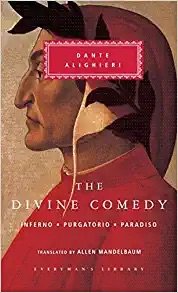
The Divine Comedy is one of the most magnificent epic poems in the canon of Western Literature. In it, Dante Alighieri will take us on a journey set in the realms of the afterlife that serve as a backdrop to explore the human condition, theology, and beatitude. The Divine Comedy is divided into three parts, Inferno, Purgatorio, and Paradiso. We will delve into the depths of Hell with Dante and his guide, Virgil; we will climb Mount Purgatory with them; and we will explore the glorious realms of heaven. Dante’s writing, which makes heavy use of symbolism, allegory, and moral teaching, will make us confront important realities like sin, justice, and divine mercy. This is a truly timeless work that still captivates and inspires many with its profound insights into the human soul and the eternal pursuit of truth and salvation. The study will range from August 25-May 3.
Bibliography of Recommended Resources
Recommended Translation: Dante. The Divine Comedy: Inferno, Purgatorio, Paradiso. Everyman’s Library 183. Translated by Allen Mandelbaum. New York: Alfred A. Knopf, 1995. ISBN: 978-09-679-43313-2.
100 Days of Dante by Baylor University. https://100daysofdante.com/
Baxter, Jason M. A Beginner’s Guide to Dante’s Divine Comedy. Grand Rapids, MI: Baker Academic, 2018. ISBN: 978-0801098734.
Leithart, Peter J. Ascent to Love: A Guide to Dante’s Divine Comedy. Moscow, ID: Canon Press, 2001. ISBN: 978-1885767165.

Summer Study: The Genesis of Gender by Abigail Favale

Join us this summer for an engaging and thought-provoking study! We will be diving into Abigail Favale's insightful book, The Genesis of Gender: A Christian Theory, exploring the theological understanding of gender through a Christian lens. This study will provide a platform for meaningful discussions and reflections on this important topic.
We invite you to join us every Thursday for an enriching evening. We will begin with Evening Prayer at 5:00 PM, followed by a delightful dinner together at 5:30 PM. Afterward, from 6:15p to 7:15p, we will gather for our book discussion, delving into the profound themes presented in The Genesis of Gender.
Additionally, we are excited to offer educational activities for children during the study, providing an opportunity for them to grow in faith alongside us. It's a wonderful chance for families to come together and learn in a supportive community environment.
Mark your calendars for the first session on June 1 and subsequent sessions every Thursday until August 10. We encourage you to acquire a copy of the book in advance and read along to fully engage in the discussions. However, participation is not limited to those who have read the book—everyone is welcome! See you there!
For more information, please contact Fr. Wesley.

Reflection: Doubt Your Doubt
In his most recent sermon, Dcn. David reminded us that the First Sunday after Easter has often been called the Sunday of Thomas or Doubting Thomas Sunday. Historically, the Gospel lesson included the story of his doubting the resurrection and Jesus restoring his faith by showing him his wounds. This has got me thinking about the topic of doubt and how it’s important for all of us to doubt our doubt.
Doubt is, to some extent, built into our nature. Many people find themselves going through crises of faith at different points in their lives. Some doubts are more intellectual in nature, a failure to connect faith and reason well. Still, others doubt in a raw and emotional way.
In my own experience, nothing makes me doubt my faith more than the suffering of children. It’s so visceral for me that I can’t even formulate it in a rational way, other than to look at the situation and then look up and ask God, “How is this happening?” On an intellectual level, I can express an argument for why suffering exists, why Christianity best explains it, and why we look to the future when God will right these wrongs. Even then, my heart tends to be slow in coming around.
All this is to say: doubting is inevitable and the Church should never “doubt shame” someone into belief. Instead, the Church should be a place where one can ask authentic questions within a community that walks beside them through whatever issue they’re wrestling with.
At the same time, doubt should be done responsibly with a proper posture. That posture looks less like Job and more like Habakkuk. In Job, the title character uses a theological system known as retribution theology as a way to insist that God had made some kind of error and that his suffering was unjust. Still, the problem with Job seems less to do with his theology and more to do with the way he accuses God. Indeed, the oft quoted, “For I know that my Redeemer lives” (Job 19:25; RSV) is a defiant stand on his own self-righteousness and a complaint that he has to look elsewhere to be vindicated because God is in error.
In the book of Habakkuk, the prophet sees injustice in the geopolitical circumstances of the world. Israel, God’s covenantal people, are being bullied by other, stronger nations. The prophet hears God pronounce this as a judgment against Israel and can’t believe his ears. He argues against God’s plan but then, at the end of his protest, he says:
“I will take my stand to watch, and station myself on the tower, and look forth to see what he will say to me, and what I will answer concerning my complaint.” (Habakkuk 2:1)
Habakkuk is a model for doubting for those of us within the Church. He is honest with God while at the same time raising legitimate questions due to his lack of understanding.
All this is a preface to point out that there is a fad of contemporary Christians who rely heavily on the experience of doubt in ways that cause them to seriously deviate from (little-o) orthodoxy into a progressive Post-Evangelicalism.
Unfortunately, these instances of doubt can be more harmful than positive. It is possible to commodify one’s doubt, to brand oneself as “enlightened” at the expense of orthodox teaching, doctrine, and practice while still claiming to be Christian. In these situations, doubt allows doctrine to become fluid and subjective. Tradition becomes just merely a path where one “walks into the mystery of God” but there is no way to measure the validity of said traditions.
One of the implications of this mode of questioning is that the doubter can easily become the provocateur. Often times this can be out of a desire to be “prophetic.” It should be remembered, however, that doubt isn’t an excuse to obfuscate or confuse through vague, obnoxious, or cynical comments. It all goes back to posture.
Which brings us to the point. As Presbyterian Pastor Timothy Keller would say, “doubt your doubt!” That’s not an empty platitude. It’s an exhortation to radically interrogate the source of your doubt. Frequently, doubt can become a means by which we either intentionally or subconsciously distract from our own shortcomings and allow them to perpetuate. Sometimes are doubts can show us larger problems with ourselves than with our belief system.
But in instances where we do have legitimate doubts, let us remember the posture of Habakkuk and ultimately be willing to submit to God’s answer to our problem. Wielding doubt responsibly can help us further conform to the image of Christ and work through the tough issues. When it’s done irresponsibly, it can take us places we don’t want to go.
The 2023-2024 Intercommunion Prayer Cycle
As Anglicans, we believe strongly in the power of prayer. In particular, we believe in praying for Christ’s Church. Each year, we publish a Prayer Cycle where we pray for parishes and clergy in the jurisdictions with which we are in communion. You can find the Prayer Cycle below:
Reflection: The Paschal Triduum

The Paschal Triduum, also referred to as the Triduum Sacrum (Latin for “Three Holy Days), is the three day observation of Jesus’ Passion and Crucifixion. The Triduum includes Maundy Thursday, Good Friday, and Holy Saturday and ends at Evening Prayer on Holy Saturday when the Easter Celebration begins. These three ancient observations walk us through the tragically beautiful events that brought about our redemption. And so the purpose of this reflection is to make us more familiar with each day.
While these are three different days, they share the same basic subject: the Paschal Mystery. The Paschal Mystery refers to the Passion, Death, and Resurrection of Jesus Christ, the center of our faith. The term “paschal” connects these events to the Jewish Passover because Jesus is the fulfillment of God’s liberating activities in Exodus. Further, the Paschal Mystery is a cycle of death and new life as we walk with Jesus to the Cross and celebrate his glorious Resurrection. This macro-redemptive story reminds us of our own individual stories and how those of us who are “in Christ” have experienced those same cycles through the sacrament of Baptism in which we died to sin and were raised to walk in the newness of life.
The Triduum begins on Maundy Thursday. While the most “normal” of the services, there are still a few unique emphases and practices. First, we commemorate the Last Supper between Jesus and his friends as well as the institution of the Sacrament of the Altar: “Do this in remembrance of me.” Further, the Gospel reading is often the story of Jesus washing his disciples feet, reminding us of the great humility of our Savior and the mandatum (command) he gave to his followers (St. John 13:14-15): “If I then, your Lord and Master, have washed your feet; ye also ought to wash one another’s feet. For I have given you an example, that ye should do as I have done to you.” At the end of the service, the Sacrament is moved from the Tabernacle over the Altar to an Altar of Repose and the Altar is stripped as we think about Jesus’ betrayal at the hands of one of his friends. No Mass is said from the end of the service until the Easter Vigil and the people leave this service in silence.
On Good Friday, the focus is on the Crucifixion of Jesus, the great sacrifice that the Paschal Lamb makes for us. Without the Cross, there is no Christianity as Jesus atones for our sins, enabling us to have a restored relationship with the Father. While Holy Communion is not consecrated on Good Friday, we do plenty to commemorate what Jesus did for us. At the beginning of a series of Scriptural passages are read: Hosea 5:15-6:6, Hebrews 10:1ff., and St. John 19:1ff. These passages and the prayers that attend them remind us of what Jesus accomplished for us. After that, we pray “The Solemn Collects,” prayers for the Church of God. The Solemn Collects mirror the Prayer for the Whole State of Christ’s Church as we pray for the Church to continue to spread the Gospel, our Bishop, Clergy and other servers, the President, catechumens, true doctrine, those who travel, those who have separated themselves from the Church through heresy and schism, preservation from the devil, and the conversion of the Jews and other non-Christians. Then we venerate the Cross, the precious instrument of our redemption. After we celebrate this symbol, we listen to the reproaches, those are verses from Scripture that are read reminding us of what God has done for us while we ask him for his mercy. Finally, we receive Communion from the Altar of Repose before leaving.
The Easter Vigil is the first celebration of Easter. The church is dark and we begin outside as we light a new fire. Once the fire is blessed, the Deacon uses it to light the Paschal Candle. He then leads a processional into the church chanting, “The light of Christ” while the people respond “Thanks be to God.” The Paschal Candle is used to light all the candles on the Altar. This reminds us that Christ is the light of the world who shines in the darkness (St. John 1:5). When the candles have been lit, we sit for the reading of prophecies that anticipate the Resurrection of Jesus. Then the Baptismal Font is blessed. Just as Jesus was laid to rest in the Tomb only to burst forth after his Resurrection, so the Font is both a tomb and a womb for us. In it, the old person dies and the new is raised to life. When the Font has been blessed, the priest then changes from purple into white and the Easter celebration begins as we go to the Altar and receive Holy Communion!
These three sacred days are about observing the events at the heart of our faith. Yet the goal is not to treat them as purely liturgical events. Liturgy is important because it forms and shapes us; it cultivates our imaginations and trains us to take the Gospel into the world. We vividly recollect Our Lord’s Passion, Death, and Resurrection so that we might be a people who live out the rhythm of the Paschal Mystery in our own lives.

Reflection: The Palm Sunday Processional

Palm Sunday is the beginning of Holy Week. I’ve always found it to be a strange way to begin Holy Week because of the way the crowds celebrate Jesus’ arrival despite the fact that he was dead less than a week later. Still, the point of the liturgical observations of Holy Week is to walk with Our Lord through the story: we enter Jerusalem with him, we sup with him and the disciples at the Last Supper, we strip the altar as we reflect on Judas’ betrayal, we reflect on the horridness of the Crucifixion, while also venerating the Cross as a beautiful symbol of our redemption. At the Easter Vigil, we anticipate the resurrection through the reading of Old Testament prophecies and the blessing of the baptismal font where new Christians will be birthed. Finally, on Easter morning, we celebrate the fact that “He is not here; for he is risen.”
The Palm Sunday Processional, as it’s currently practiced, goes all the way back to at least the fourth century. The first record of it that we have is in the diary of a Spanish pilgrim to Jerusalem who noted that the Christian inhabitants of the city would process into the city with palms while singing hymns. I take this to mean the tradition had been established for some time prior to this record. We know the tradition spread until it was made a virtually universal liturgical practice by the fifth century. As Western Christians, we receive it from the liturgical work of Gregory the Great who made it a normal practice while he was Bishop of Rome (440-461).
Biblically, the Palm Sunday Processional can be traced back to all four of the Gospels, which all describe Jesus riding into Jerusalem on a donkey while the people lay palm branches on the ground and shouted "Hosanna!" This event fulfilled the prophecy in Zechariah 9:9, part of Sunday’s Old Testament reading, which states, “Rejoice greatly, O daughter of Zion; shout, O daughter of Jerusalem: behold, thy King cometh unto thee: he is just, and having salvation; lowly, and riding upon an ass, and upon a colt the foal of an ass.”
The Palm Sunday Processional is significant for several reasons. As mentioned above, it marks the beginning of Holy Week, a time of deep reflection and penance for Christians around the world. Secondly, it symbolizes Jesus' arrival as the long-awaited Messiah, the fulfillment of God's promise to send a savior to the world. Thirdly, it represents the paradox of Jesus' kingship, as he entered Jerusalem not on a magnificent horse, but on a humble donkey. It reminds us that, unlike most earthly kings, Jesus does not win his victory through great military strength, impressive political machinations, or charismatic personality—quite the opposite! Jesus wins his victory through his suffering and death on the Cross, reminding us of St. Paul’s words in I Corinthians 1:23-24, “We preach Christ crucified, unto the Jews a stumblingblock, and unto the Greeks foolishness; But unto them which are called, both Jews and Greeks, Christ the power of God, and the wisdom of God.”
The Palm Sunday Processional is an opportunity for us to reflect on our lives. In what areas of our lives do we need to open our arms and receive him who “comes in the name of the Lord”? How have we been like the Pharisees and religious leaders who opposed Jesus?
Palm Sunday is an old tradition. As we process, I encourage you to consider the fact that Christians like you have been doing this for over 1,500 years. But more importantly, use the Processional as an opportunity to remember Jesus’ sacrifice and love for us so that we can approach Holy Week with open hearts and minds, ready to deepen our relationship with God as we commemorate the cosmos-changing events that took place 2,000 years ago.
“All glory, laud, and honor
to you, Redeemer, King,
to whom the lips of children
made sweet hosannas ring.
You are the King of Israel
and David's royal Son,
now in the Lord's name coming,
the King and Blessed One.
The company of angels
is praising you on high;
and we with all creation
in chorus make reply.
The people of the Hebrews
with palms before you went;
our praise and prayer and anthems
before you we present.
To you before your passion
they sang their hymns of praise;
to you, now high exalted,
our melody we raise.
As you received their praises,
accept the prayers we bring,
for you delight in goodness,
O good and gracious King!”

Reflection: Why A Continuing Anglican Church? A Personal Reflection
By Matthew Gray
About 5 years ago I was what you would call a “parish orphan”. My faith had gone through a complete deconstruction. This deconstruction took me to a wide variety of churches and denominations. After a somewhat difficult and anxious journey, I settled here at St. Paul’s Anglican Church. There are four reasons why I chose to make a continuing Anglican parish my home. My hope is that these will help other parish orphans find a home.
The 1928 Book of Common Prayer played a big role in my journey to continuing Anglicanism. The concept of “common prayer” was very comforting in a world of change. Hearing the same readings in church Sunday after Sunday is a wonderful thing. These repeated readings of the lectionary start to sink deep into the mind and stir the soul. Every year you will hear the same readings and get new perspectives on the biblical texts, and hopefully apply them to your life. The other part of common prayer is the daily office. In my opinion, there is no better way to systematically read through the scriptures. If you use the lectionary you will read from the Psalms, Old testament, and New testament every morning and evening. Again, the same readings will be read every year allowing them to become better understood, and applied. The common prayer tradition can really help you to understand and apply scripture.
Doctrine and theology were another important factor in my journey to the continuum. Saint Vincent of Lérins was a monk in the 5th century. He defined the word catholic as, “what has been believed everywhere, always, and by all.” Continuing Anglicans see themselves as part of the “one, Holy, Catholic, and Apostolic Church”. As a church we do a great job at believing what has been believed everywhere, always, and by all. We have bishops who can trace their lineage all the way back to ancient times. We believe in the Trinity, the use of sacraments, such as baptism and communion, and use a liturgy in our worship. You can find these elements throughout the catholic (universal) church. We are truly part of the universal (catholic) church that our Lord Jesus Christ founded.
Pastoral care plays a large part in Anglican ministry. This made a huge impression on me in my journey to St. Paul’s. The parishes in the Continuum are small in comparison to a large non-denominational or Roman Catholic church. This allows our priests and deacons to personally know their parishioners. It is not uncommon to see our priest’s children playing with the other children in the parish, or one of our priest or deacons meet up with parishioners for lunch after a service. It is a comforting and wonderful thing to observe.
The last reason is more personal. Serious Christians, or as the famous Anglican writer Martin Thornton would call, “proficient Christians” have a place in the continuing Anglican parishes. Many people in our post-modern world are looking for truth and stability. We are not looking for the latest fads or trends in our search for truth. Continuing Anglican parishes use the tried and trusted methods of church life, theology, and worship. The clergy and laity take their faith seriously. It is not uncommon to see many services of Holy Communion, Morning Payer, and Evening prayer every week. It is also common to see multiple bible and theology study groups. All of this allows a parishioner to truly develop into a better Christian and follower of Jesus Christ.
Father Gordon Anderson a priest in the Anglican Province of America once wrote on his blog, “So really, for me and for many other people, the reason we are in the continuing Anglican churches is because of genuine liturgical and theological convictions. We have read and studied a lot, and we have been to many different churches in a number of different traditions, and finally we have found our home in the continuing church.” I could not have said it any better.

Shrove Tuesday Success!
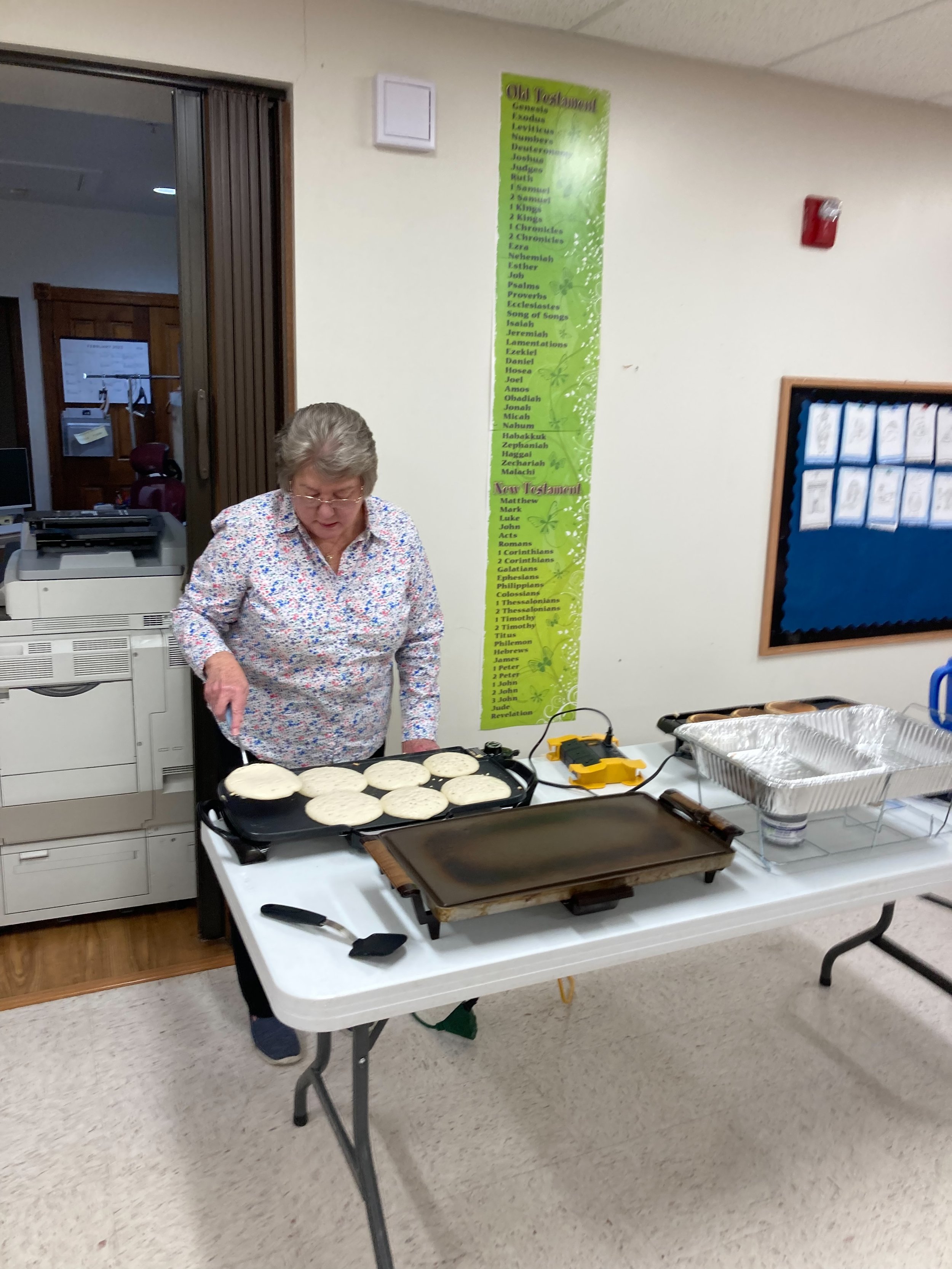
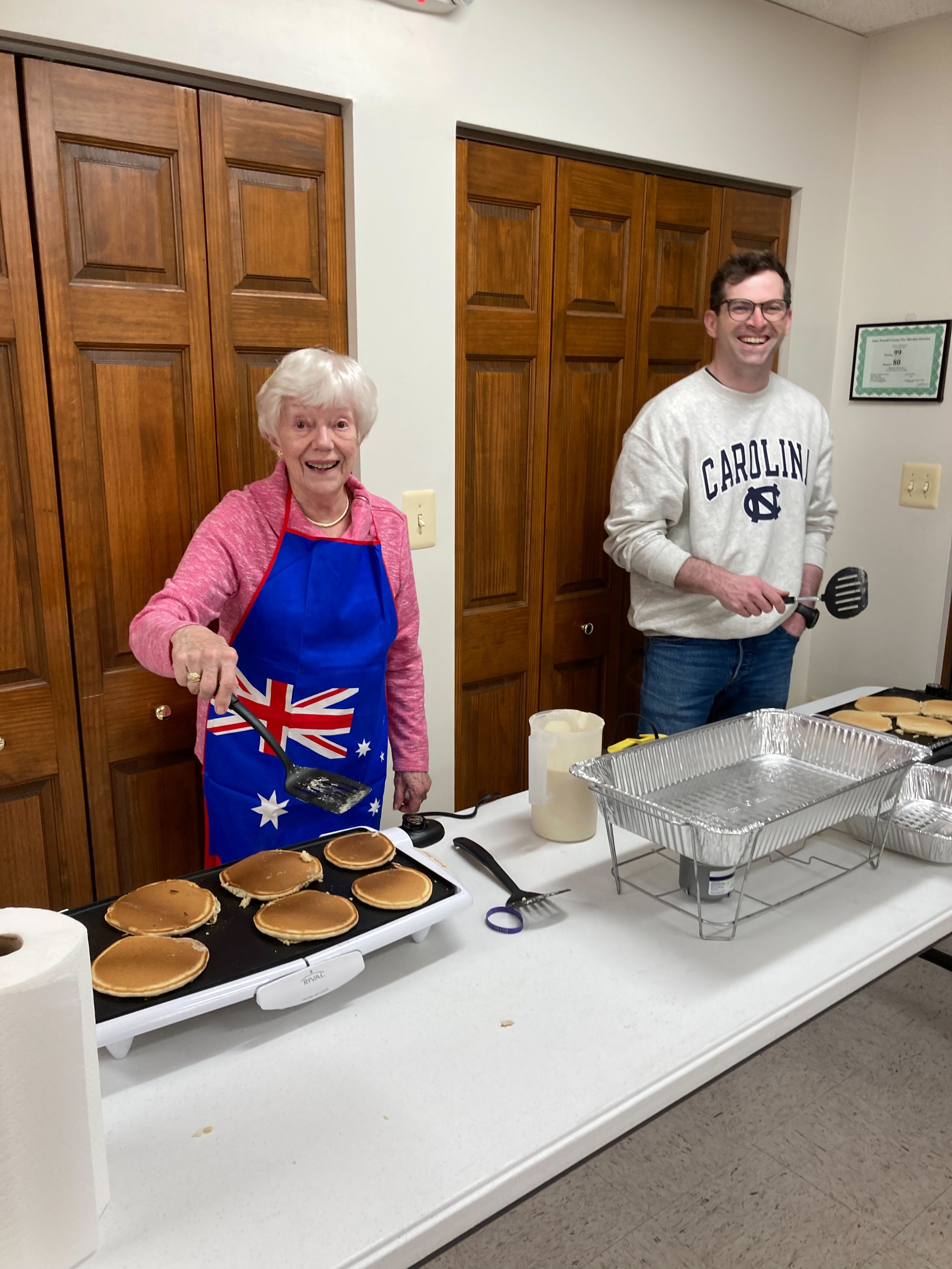
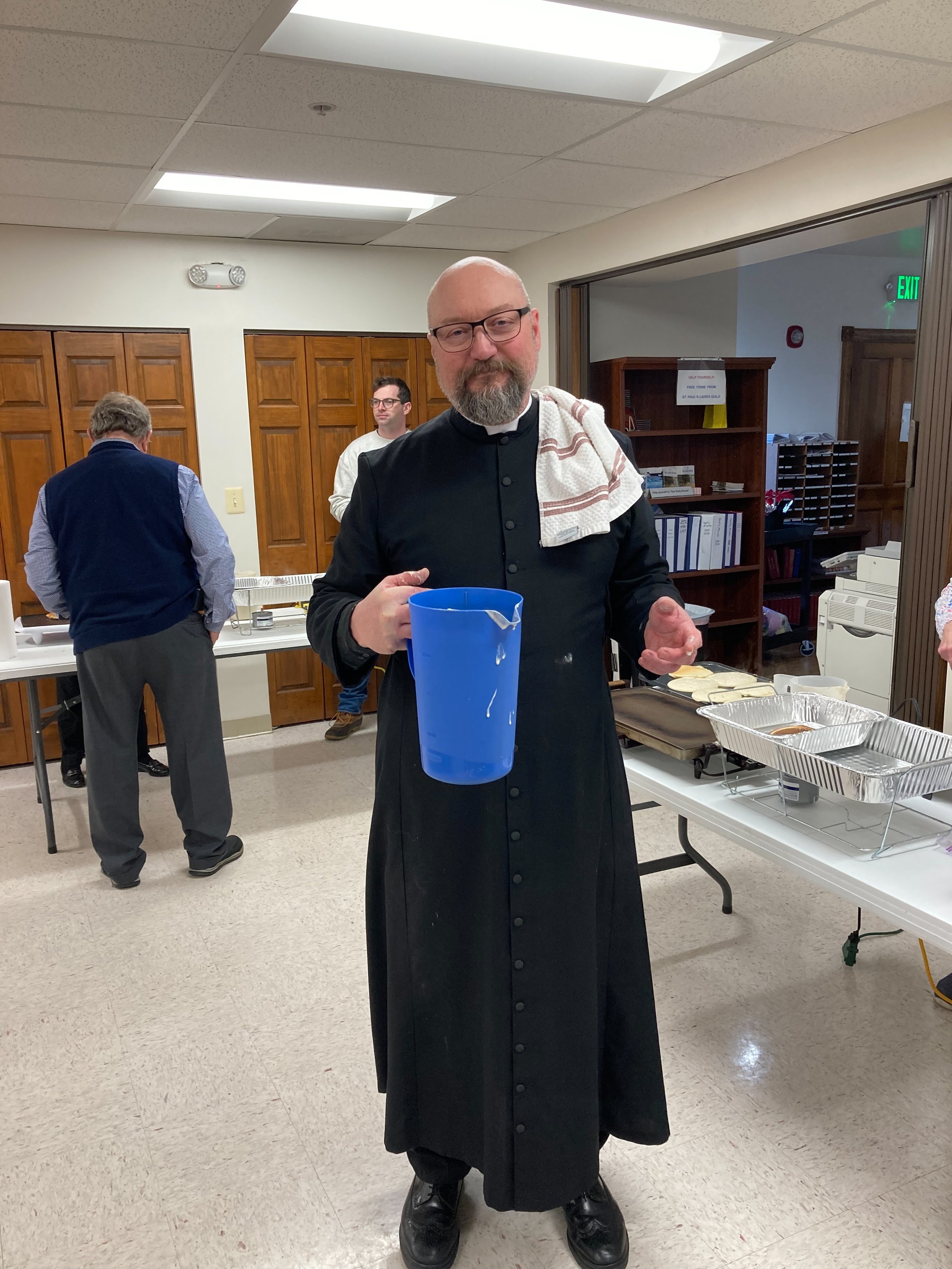
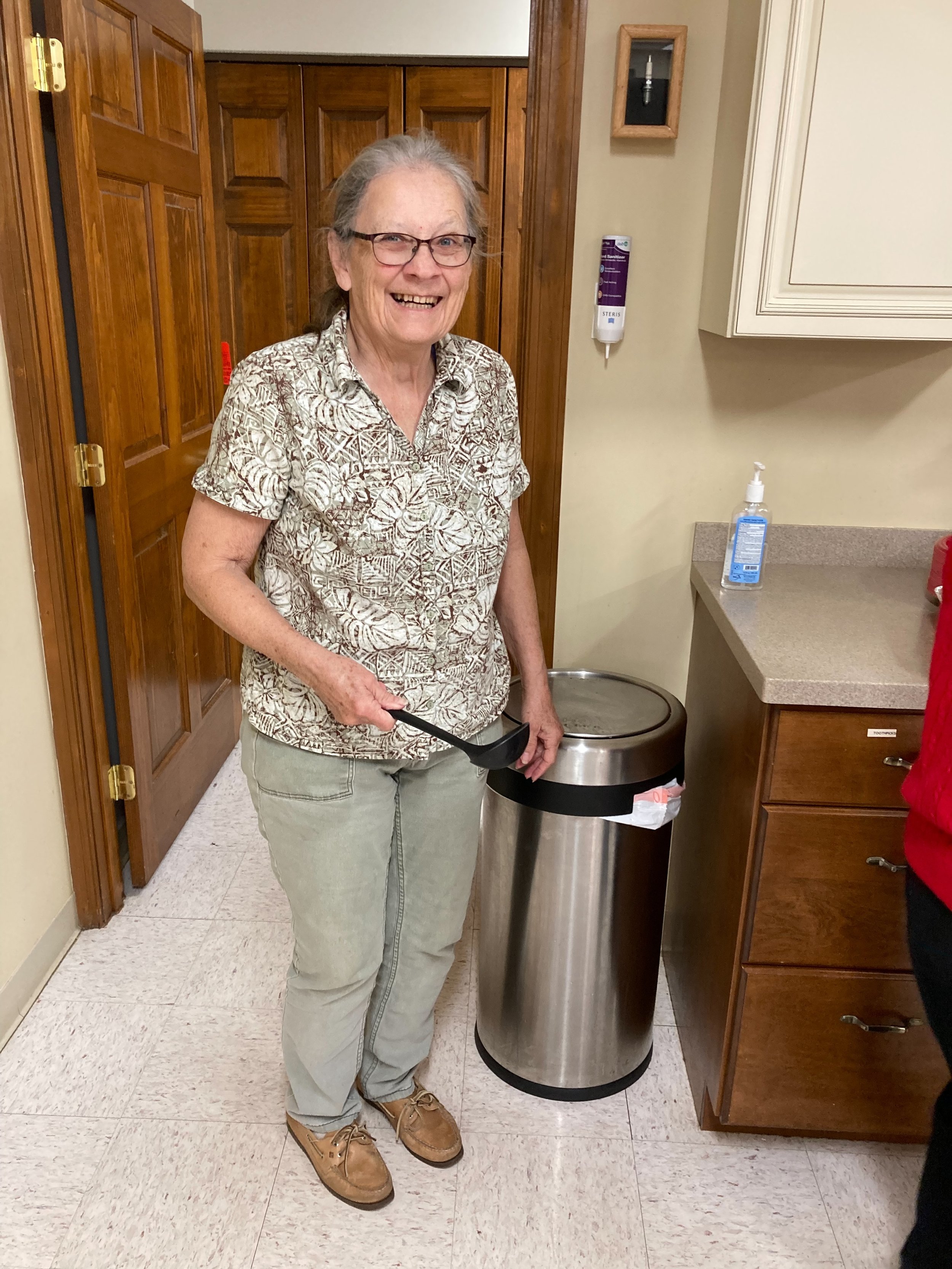
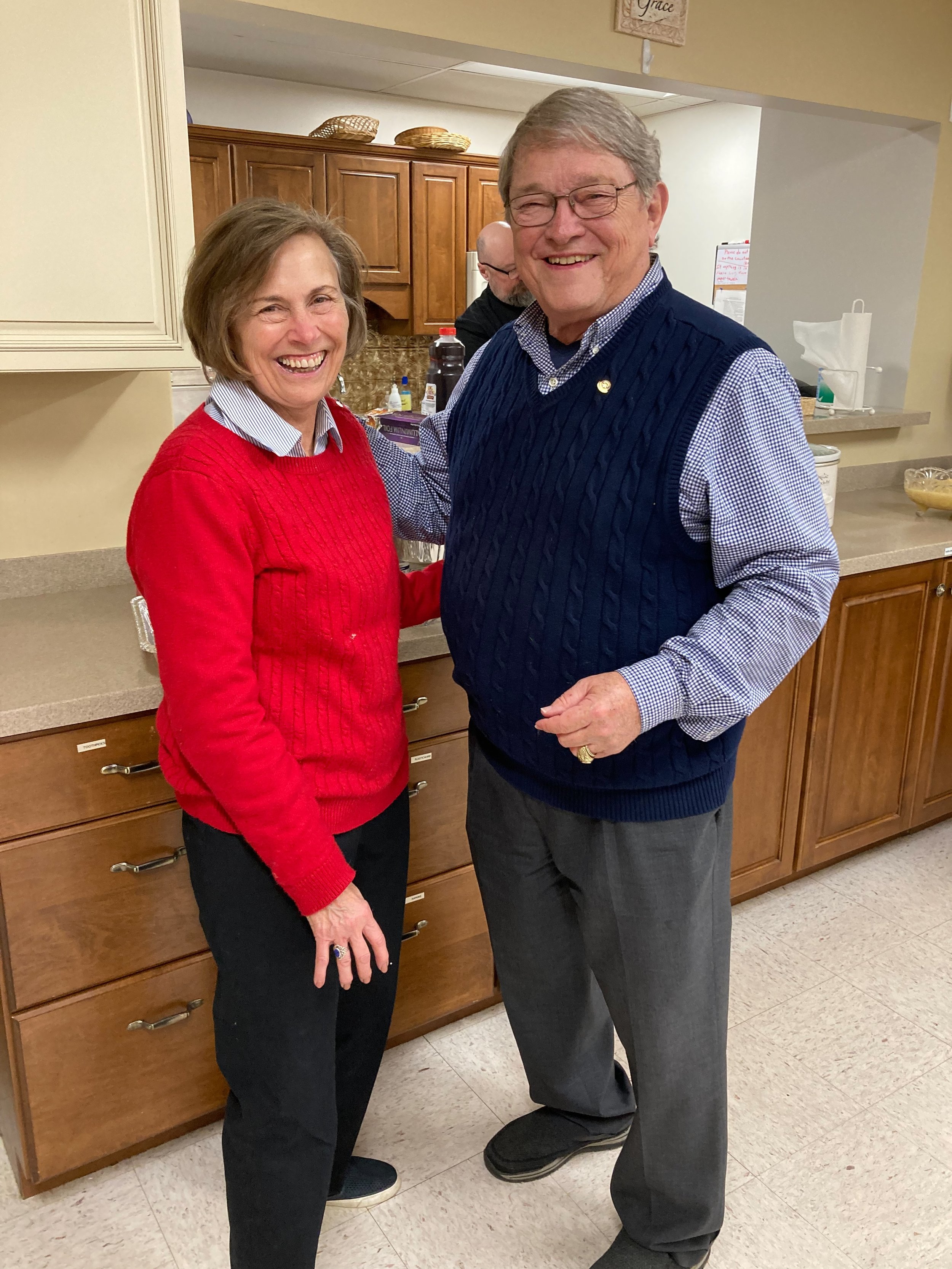
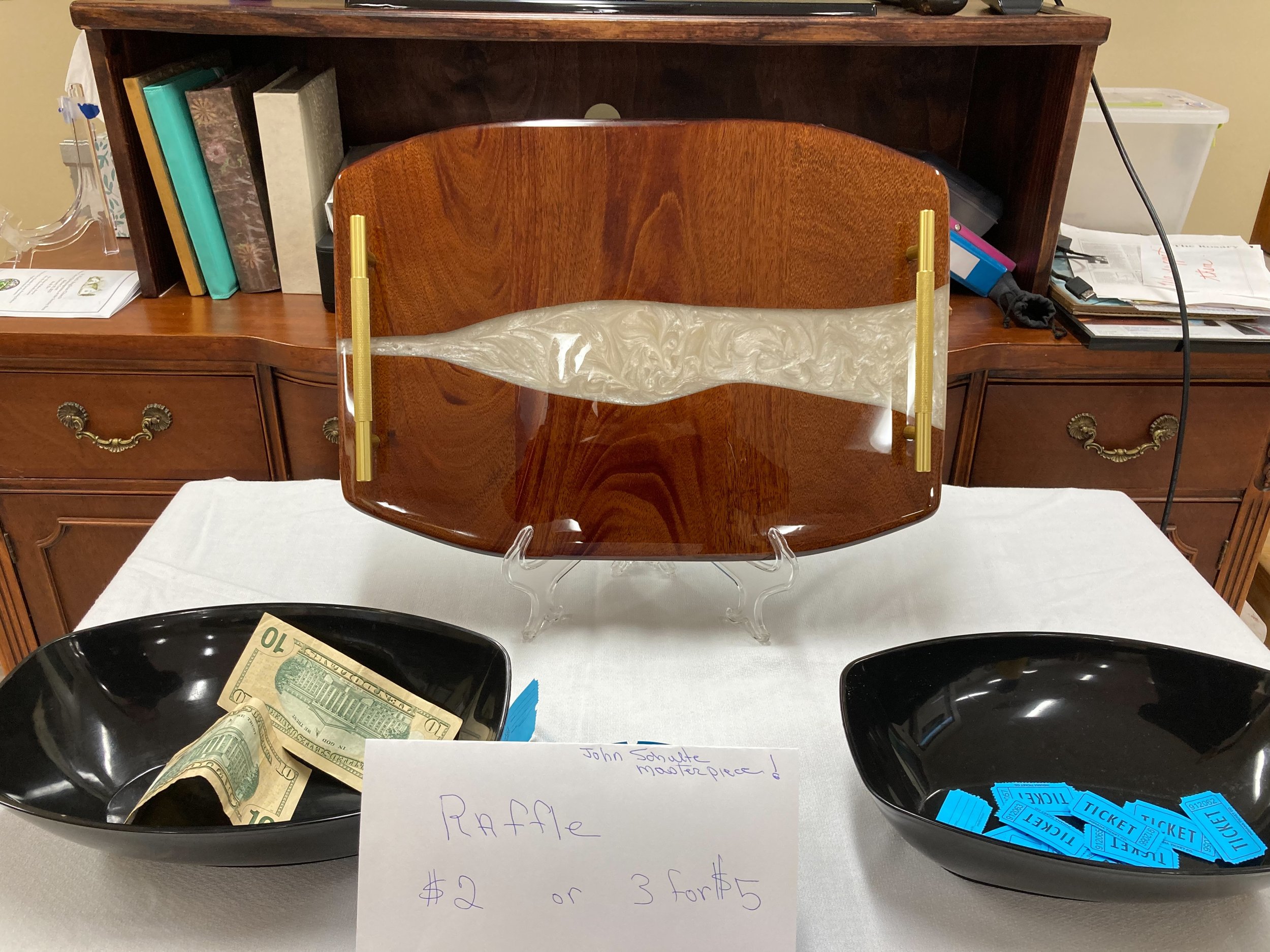
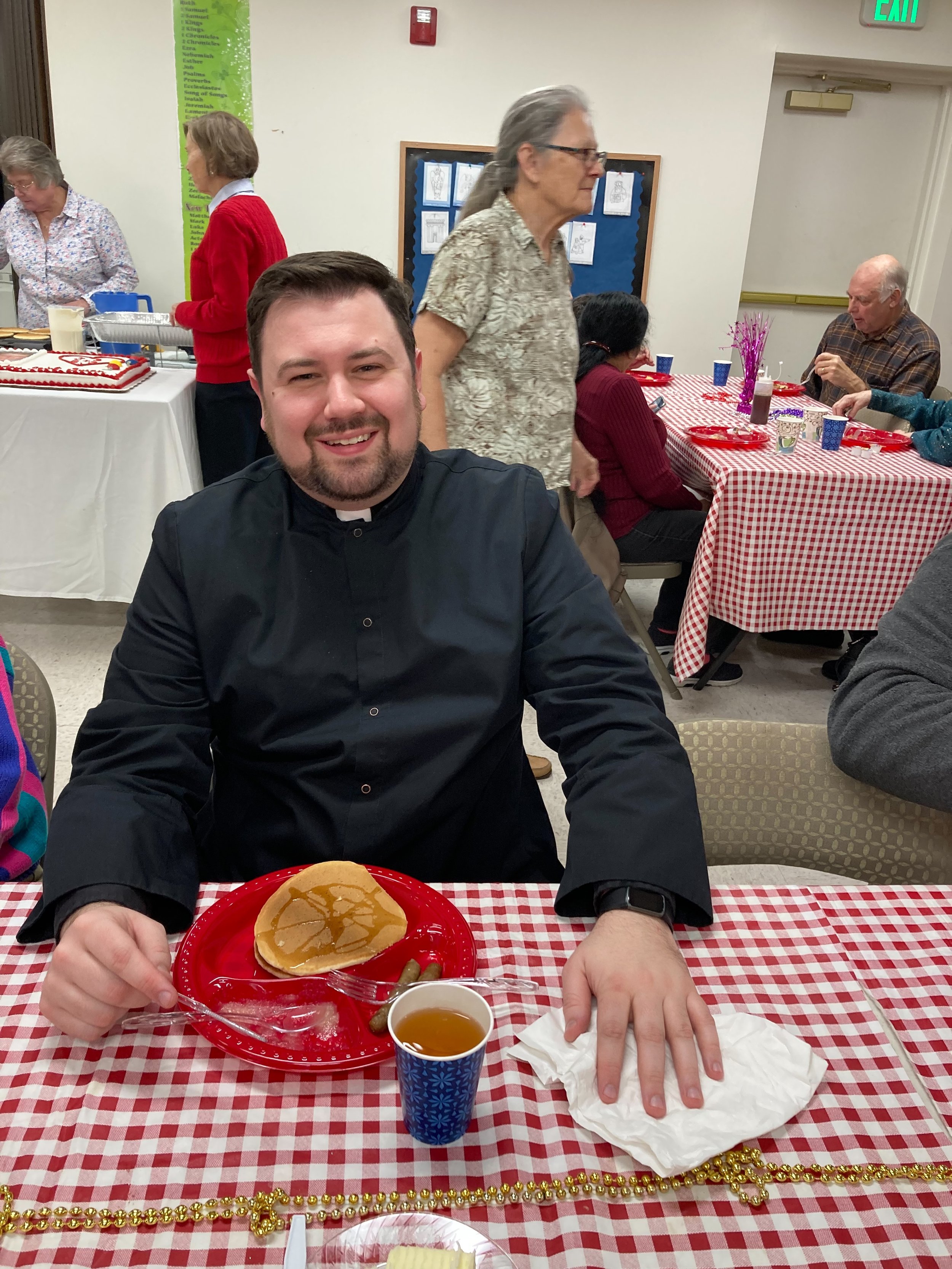
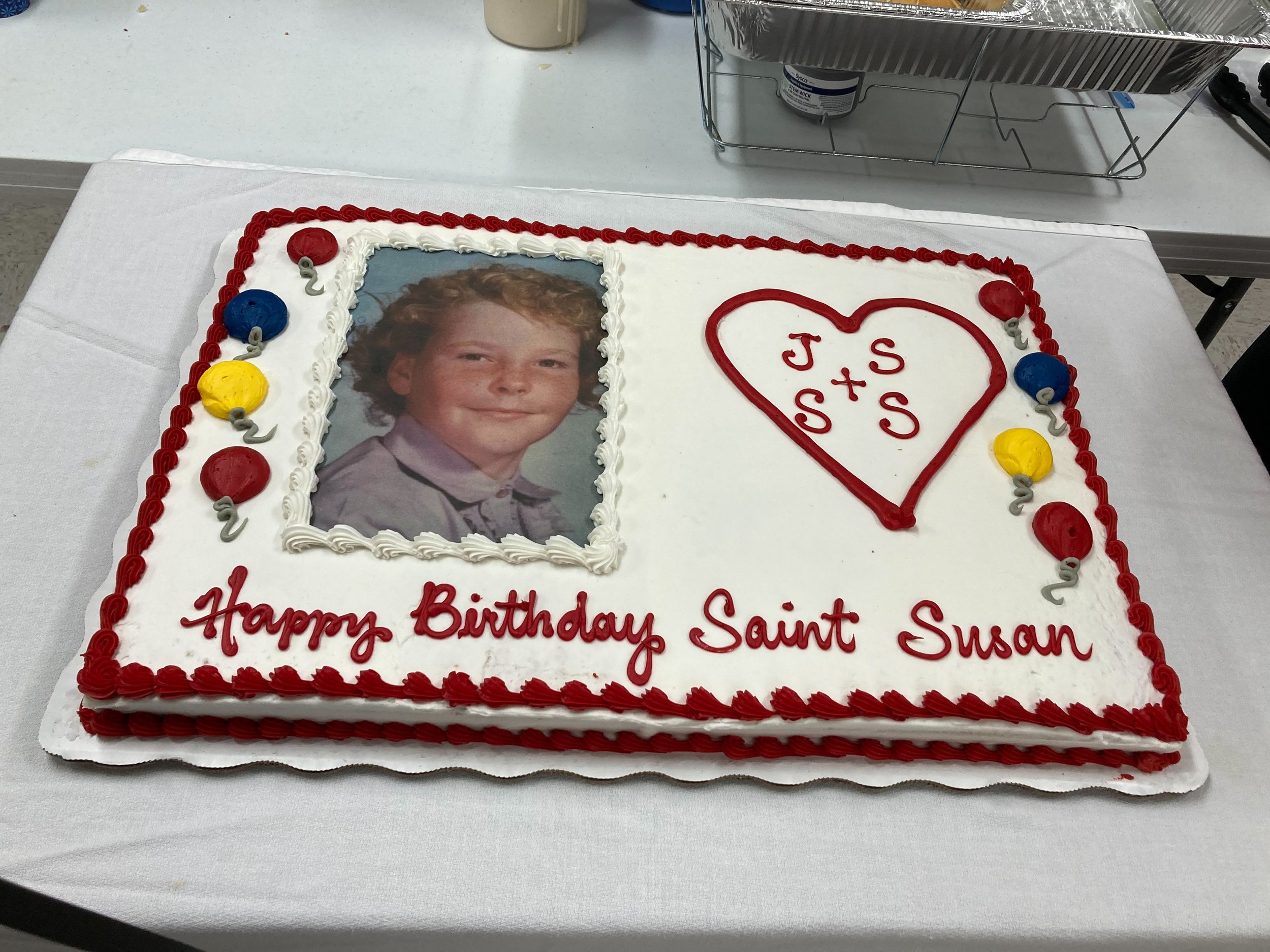
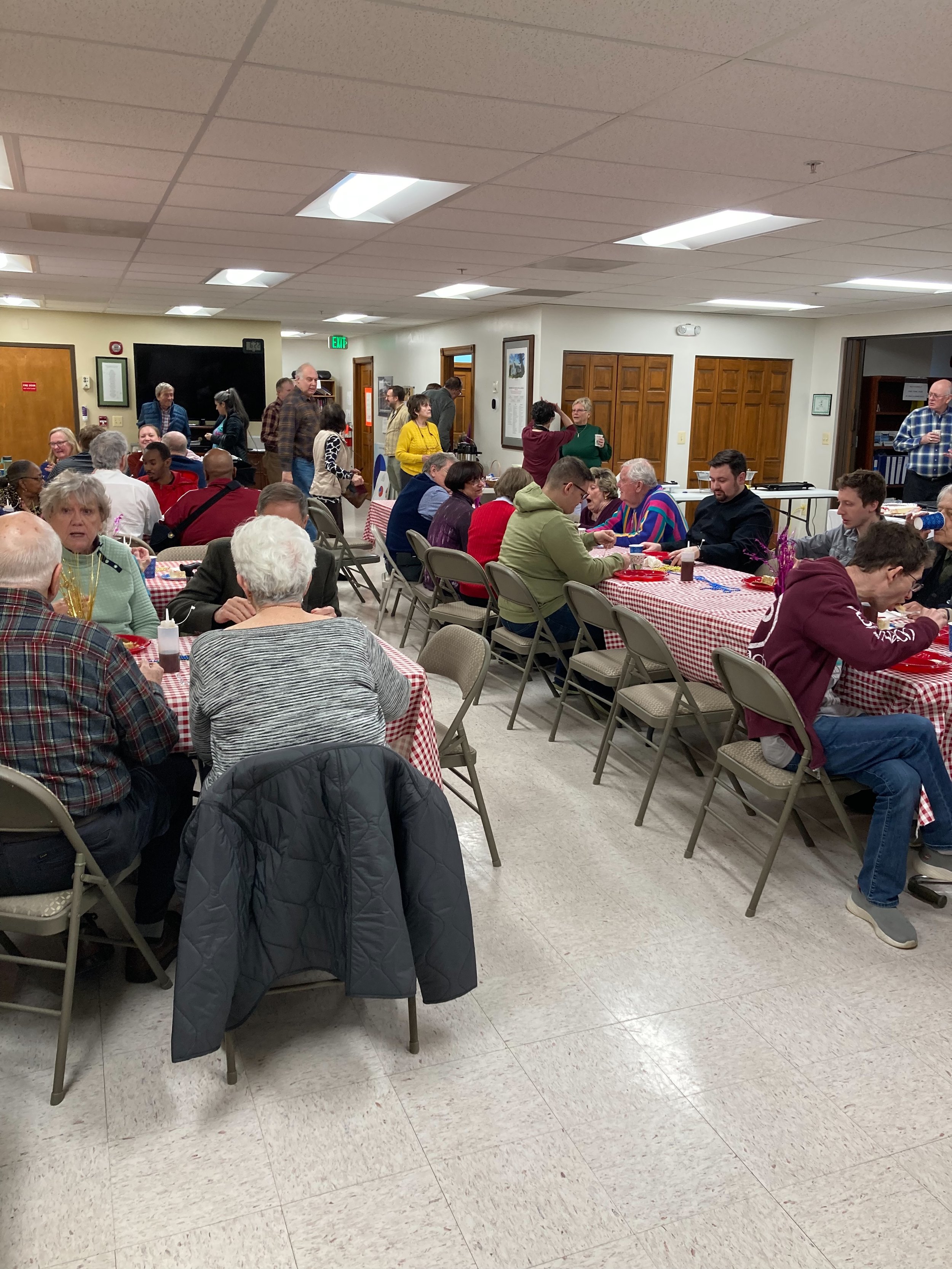
Shrove Tuesday was a great success! Thanks to Joan Smith, Cathy Gates, the Hospitality Committee, everyone who flipped pancakes, and all those who came!