NEWS

Episcopal Visit: May 12, 2024
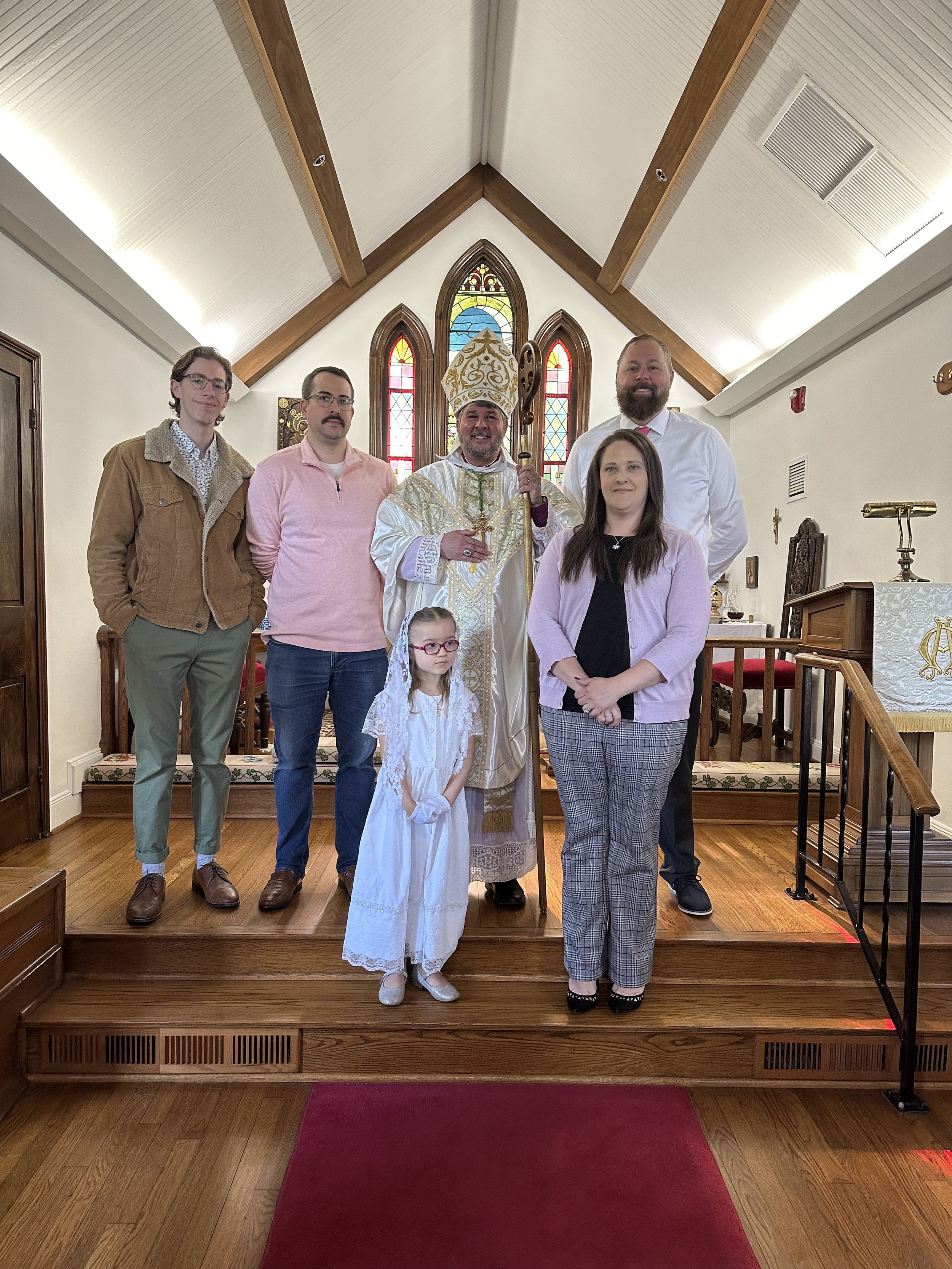
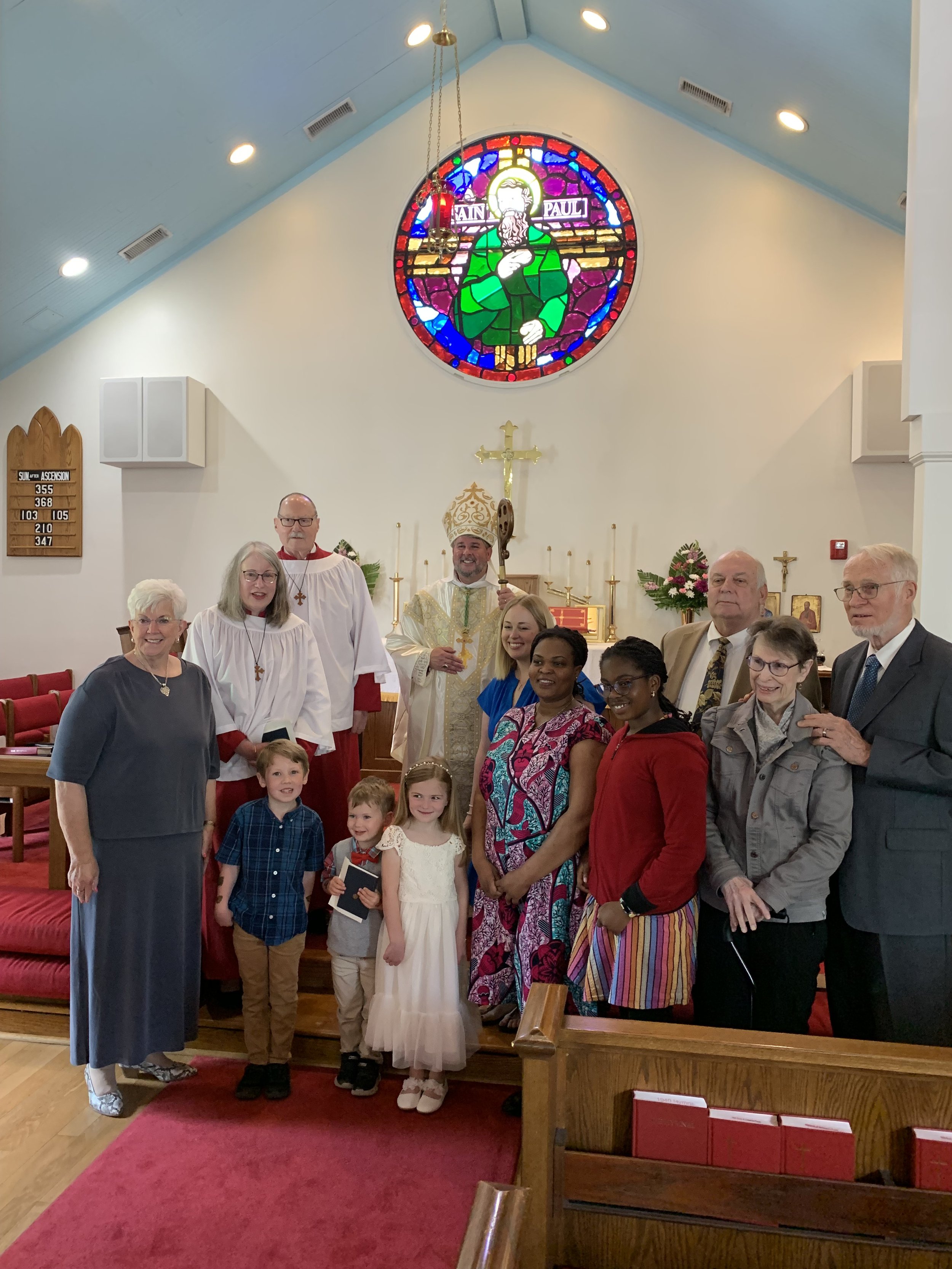
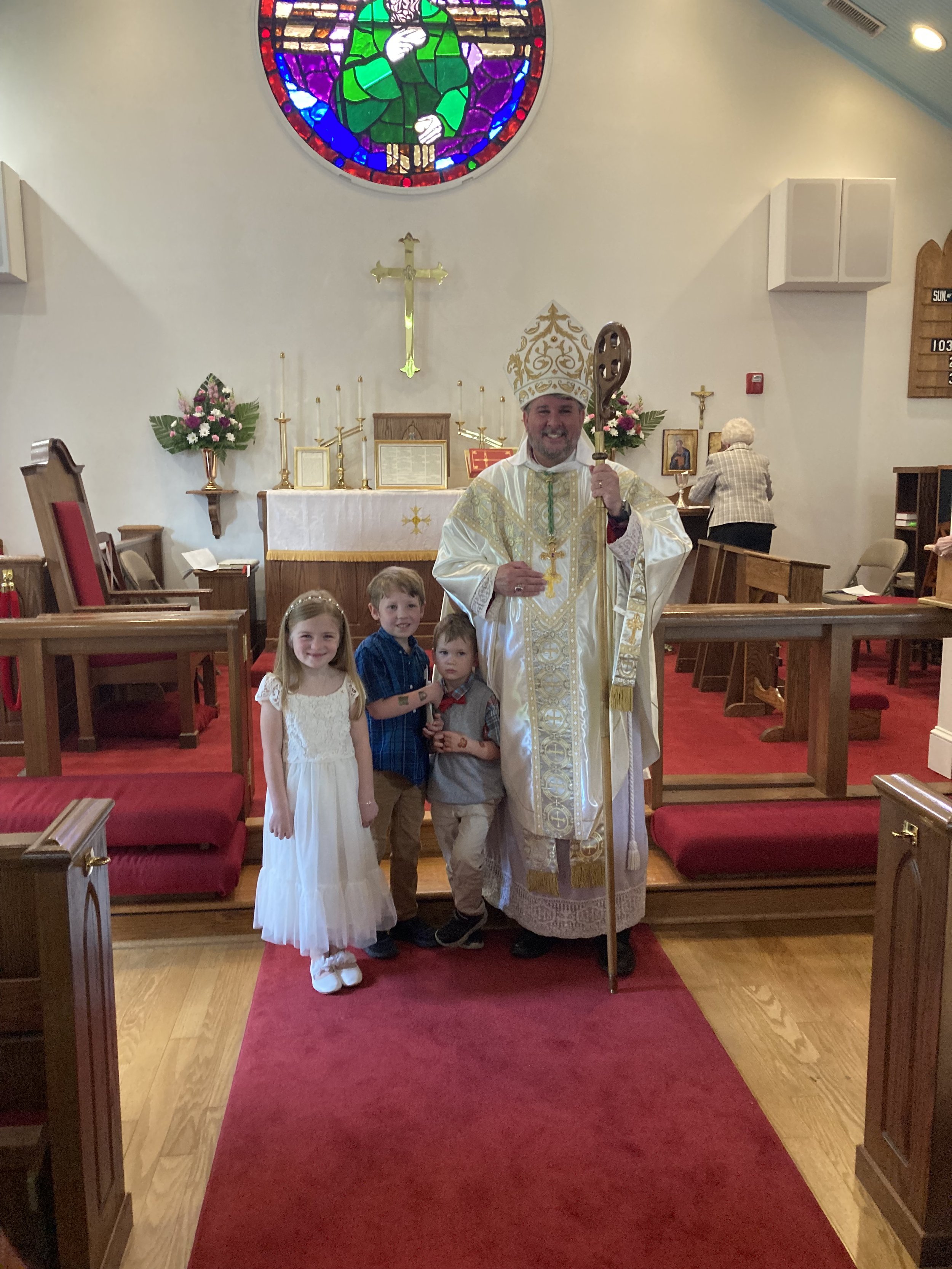
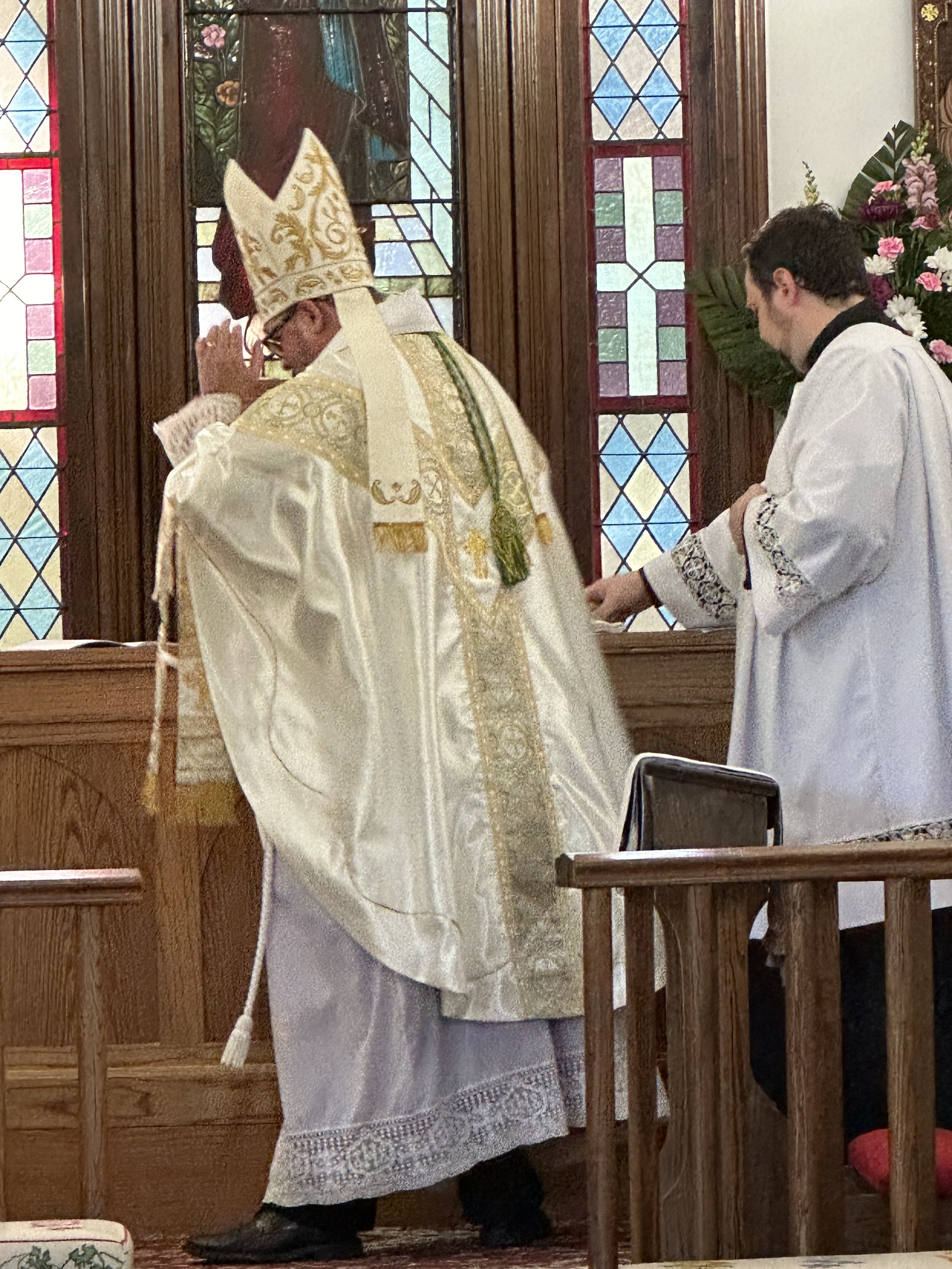
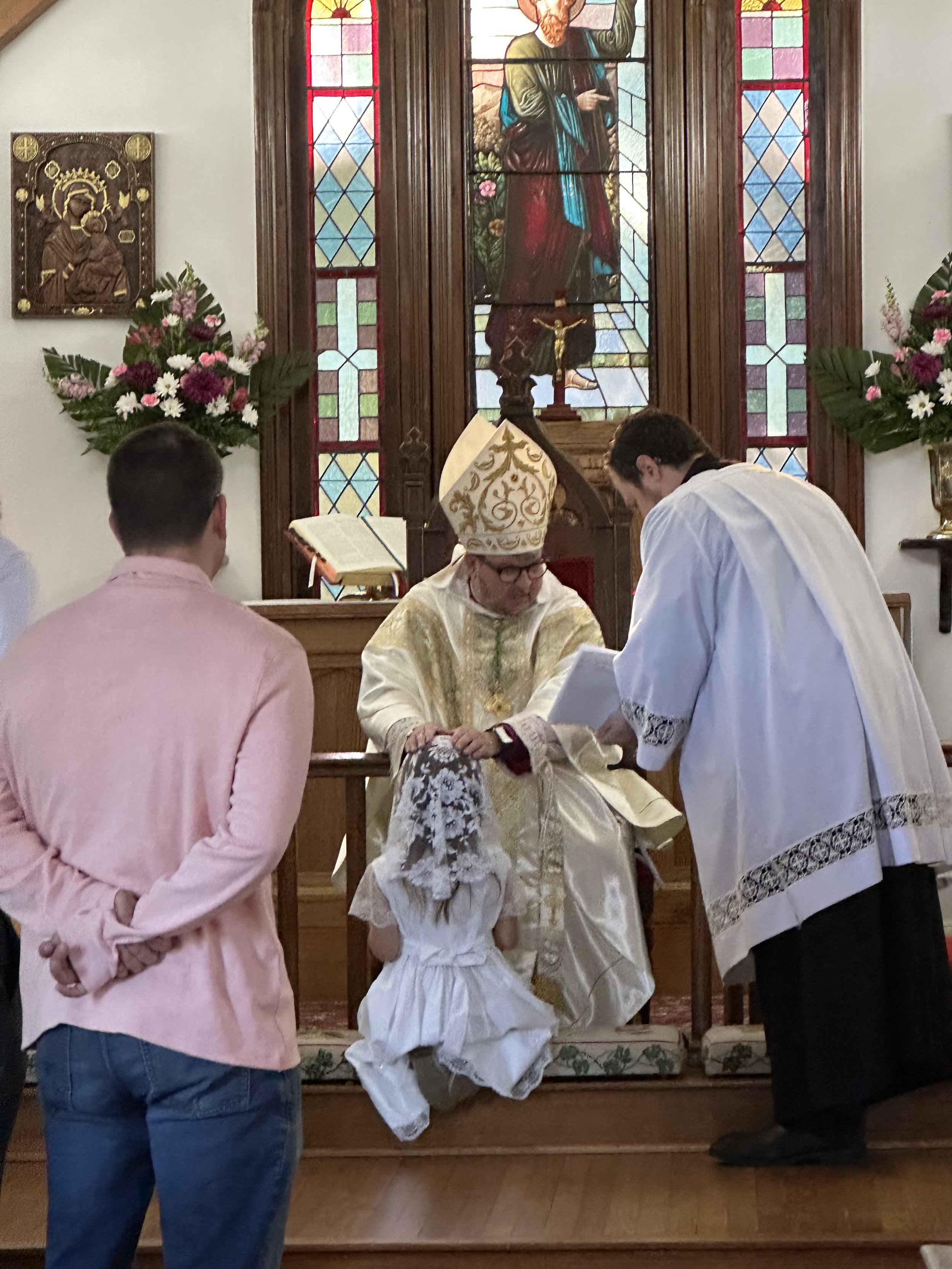
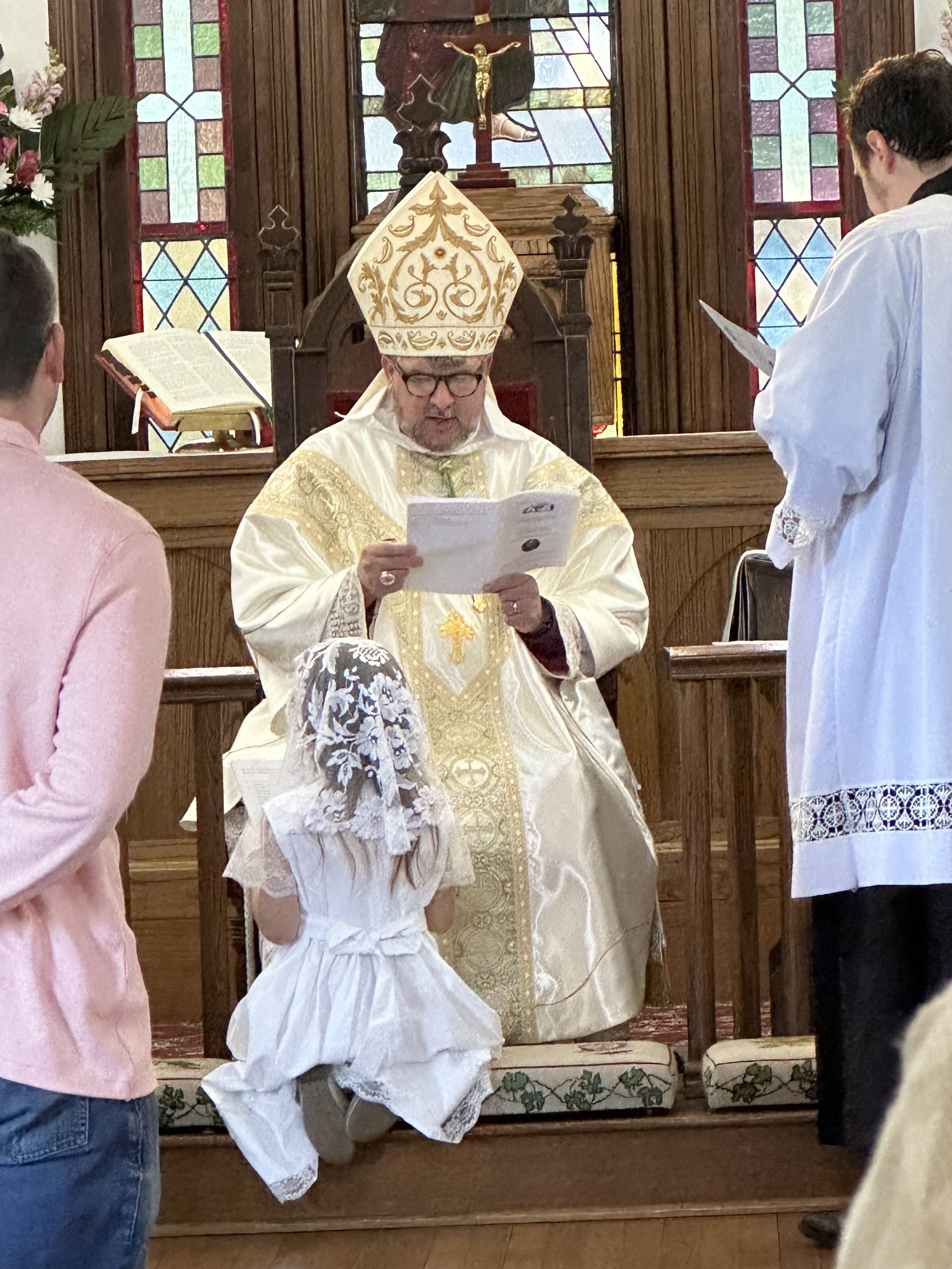
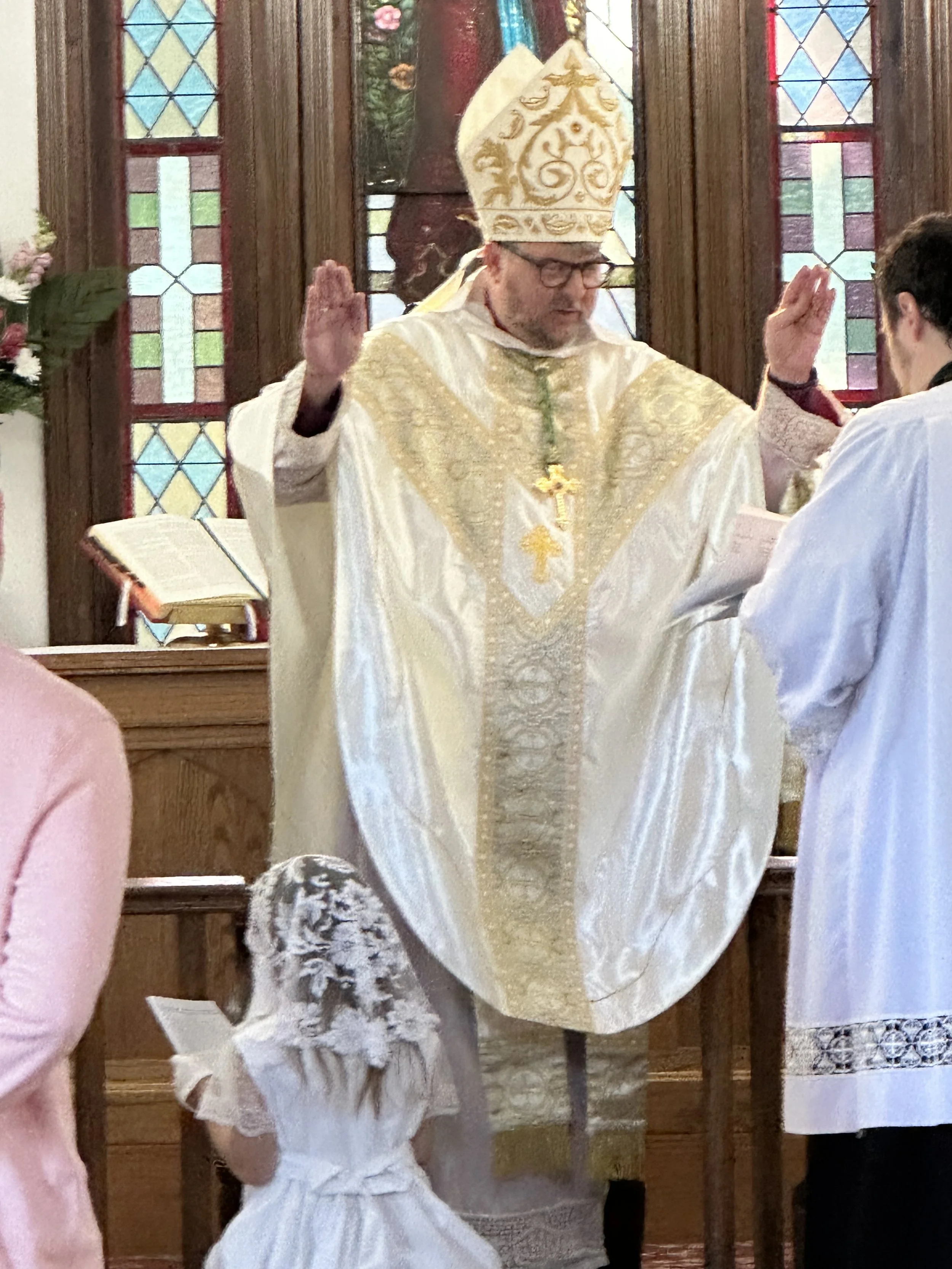
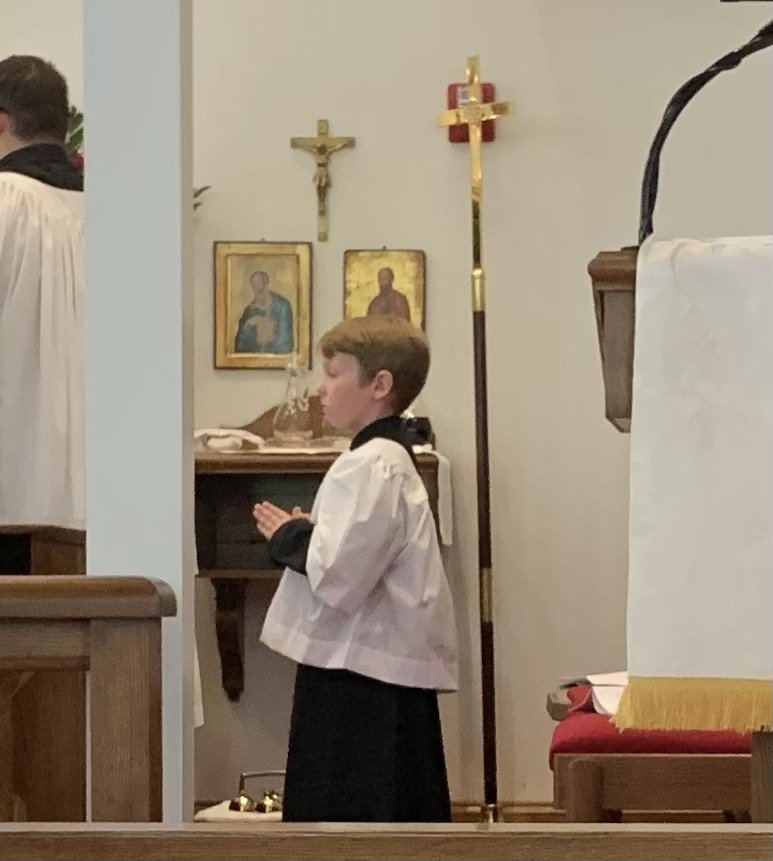
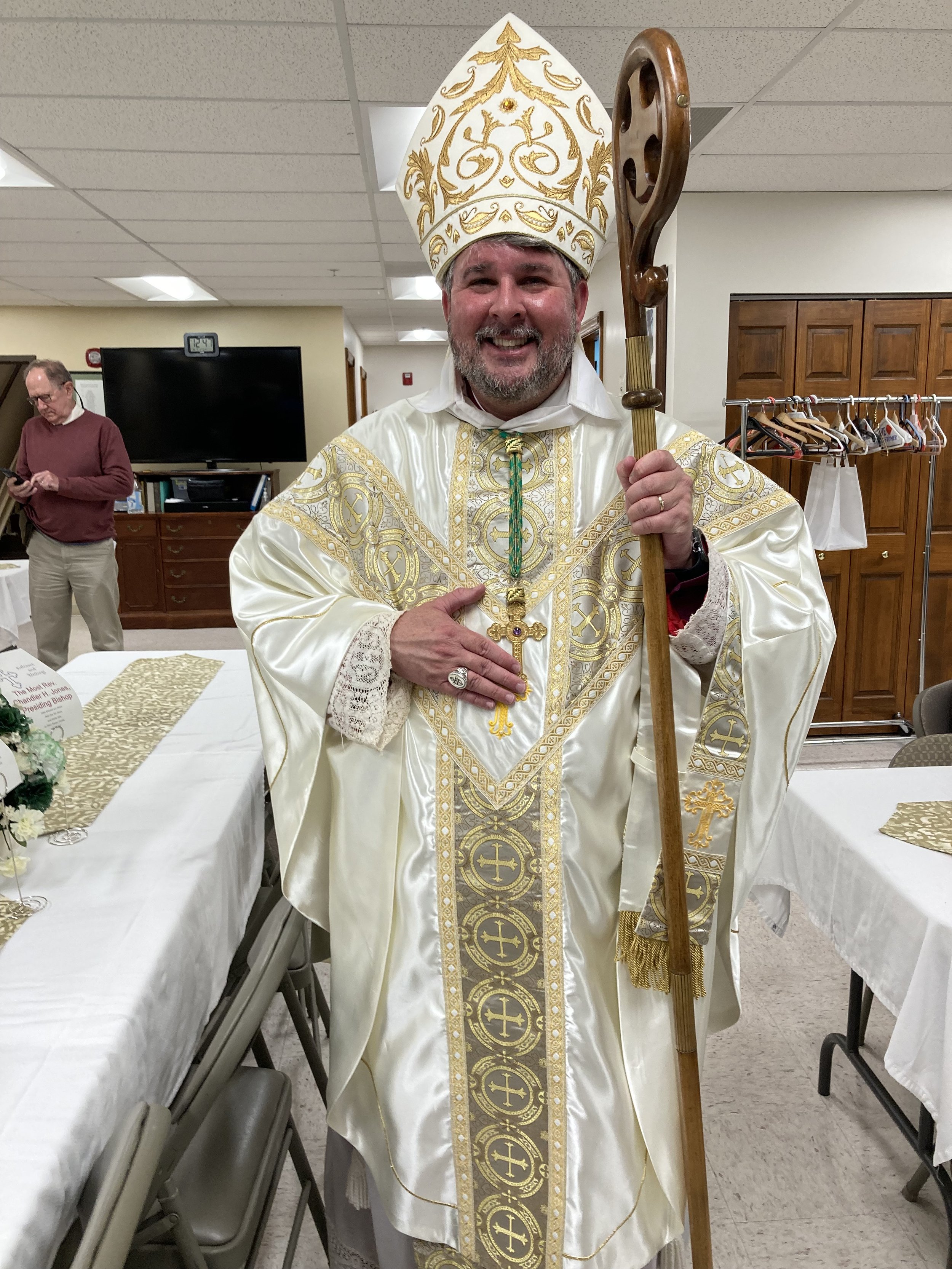
We were blessed to have Bishop Chandler Holder Jones, SSC at St. Paul’s on Sunday, May 12, 2024 for an episcopal visit. he performed a wedding, 14 confirmations, three receptions, and preached on the significance of the Feast of the Ascension and what it means for our faith! It was a busy few days at St. Paul’s, but a wonderful time.


From the Rector’s Bookshelf: Images of Pilgrimage by R.D. Crouse

I love it when God brings things together in our lives. I’m sure you’ve experienced this too: you encounter an idea or saying somewhere and then that same thing reappears in a totally unrelated context later on. This has happened to me recently with the topic of pilgrimage. I like to read a devotional book alongside Morning Prayer most days. About a week and a half ago, I had finished my last book and decided to grab something new. The book that stood out to me from my bookshelf was called Images of Pilgrimage: Paradise and Wilderness in Christian Spirituality by R.D. Crouse. A few days after I began the book, I sat down to meditate on the readings for this past Sunday (Easter III) and was hit by the fact that the Epistle reading from I St. Peter 2:11ff. began with, “Dearly beloved, I beseech you as strangers and pilgrims, abstain from fleshly lusts, which war against the soul.” Clearly, God was trying to bring something about pilgrimage to my attention…hence the theme of the sermon!
Robert Crouse was a priest in the Anglican Church of Canada who was known for his contemplative teachings. He was an expert on Augustine and Dante and taught at King’s College in Halifax. He passed on in 2011. The book is short, only six chapters over 86 pages. It is composed of material he presented at a clergy retreat at St. Augustine’s Monastery in Nova Scotia in the 1990s.
The topic of the book is humanity as pilgrim. This is not a uniquely Christian idea because “these images [of pilgrimage] belong somehow to the essence of our humanity” (17). In fact, Crouse spends a chapter detailing the pagan image of pilgrimage and how they compare and contrast with the Christian conception. Homer’s Odyssey, the great Greek philosophers, and Virgil’s Aeneid make for fruitful inquiry into the theme of spiritual journey. Crouse isolates two aspects of the pilgrimage image present in these materials: odos, “the road that lies before us, the journey” and agon, “the hero’s struggle through a wilderness of one sort of another, to find a reconciliation, a paradise, which is eternal and divine” (19). Yet, the Greco-Romans held an ultimately hopeless view of life: “heroic virtue, heroic aspiration, is heroic hubris, and is destined for defeat. That is the worm at the heart of pagan spirituality: the endless cycles of aspiration and despair” (20).
This pagan view is radically different from what is presented to us in Scripture. In the creation poem of Genesis 1, we are taught that “all existence is in the Word of God. ‘He spake and it was done.’ All is divine utterance: ‘He commanded, and they were created.’ All things are in and by God’s word; there is nothing else there” (28). Further, humanity is placed in the Garden of Eden where the divine and human dwell together; it is all, very good. But, sadly, the story doesn’t end there because of the Fall. For Crouse, the Original Sin of Adam and Eve can be explained by the mystery of liberty. Any free will must be able to choose to obey or disobey; Adam and Eve used their will to disobey. Yet, even in this, God is still sovereign: “The serpent will wound, but the brazen serpent in the wilderness will heal. There can be nothing in creation which is not God’s, nothing unencompassed by his providence, nothing which falls outside his word and will. We cannot make, nor can we unmake, paradise; it is the fundamental reality of things, abiding in the word and will of God” (30). In Exodus, we see that the “wilderness,” the place of wandering, can be interpreted as both a blessing and a curse: a place without provision in which God provides for his people.
Our Lord’s ministry begins with his baptism, after which, he immediately retreats into the wilderness where he is tempted. In that story is a recapitulation of Adam and Old Testament Israel, except that Jesus does what they failed to do by obeying God. Disobedience caused ejection from paradise, but when Jesus obeyed, the angels came and ministered to him (Matt 4:11), turning wilderness into paradise. Similar patterns can be observed in the Feedings of the 5,000 and 4,000 and Pentecost. Ultimately, however, this rhythm of wilderness and paradise culminates in the Cross: “All this comes into focus with the Cross, which is at once the tree of utter desolation, and the tree of glory; the tree of death, and the tree of life” (43). These two poles of wilderness and paradise form the tension of “already” and “not yet”: the kingdom is within us, but the Son of Man has not yet come into his glory (44). For Crouse, we see this tension in the love of God that we experience and share amongst each other in the Church.
Two other places Crouse looks to expand on the image of pilgrimage via paradise and wilderness may be of interest to many: St. Augustine and Dante’s Divine Comedy. For Crouse, St. Augustine[1] advances the Christian conception of pilgrimage:
“The spirituality of St. Augustine is the spirituality of pilgrimage, and abounds in images of wilderness and paradise, of exile and repatriation. This theme runs through all his works, but perhaps it is most familiar and most accessible in the Confessions, his own ‘Odyssey of soul’, the story of his liberation from the futility of the social, educational and professional conventions of a dying age, from the ‘barren land’ he had made of himself, to find a new principle of thought and action in the paradise of the word of God” (54-55).
Dante’s Divine Comedy, a work we have been exploring this year at our Friday Study, is another model of pilgrimage: “Dante’s great poem presents itself on several levels: first of all, there are the great poetic images, Hell and Purgatory and Heaven, which specify major divisions of the work; but they are poetic images, and htepoem is not about those in any very direct way. I tis about the universal pilgrimage of humankind, pagan and Christian man, in this earthly life, and it speaks about the conditions and the terms and the end of the journey. But finally, it is about the poet’s own pilgrimage, the journey of his soul to God” (64-65).
What does Crouse’s exploration of Christian pilgrimage do for us? First and foremost, it helps us orient ourselves in light of rhythms of wilderness and paradise. When we understand the wilderness as a place of blessing and curse, we can conclude that “the trials of the wilderness are necessary, and must be embraced…Certainly in the wilderness — the confusions of the world in which we live, uncertainties within the Church, confusions within our own souls — certainly the wilderness presents us with problems and dilemmas, and it is surely not very easy to ‘count it all joy’. But that is precisely the nature of our calling, and, by the grace of God, who gives the Bread of Life in the wilderness, we are not without resources to do just that” (80-81). The fact that each and every one of us is on a pilgrimage through the wilderness of life that will hopefully bring us to Paradise brings the present more sharply into focus.
[1] The Feast of St. Augustine is May 5. Because that falls on a Sunday this year, it is relegated to a “commemoration”. The Feast of St. Monica, St. Augustine’s devout mother who prayed for his salvation during his years of prodigality, is always celebrated on May 4, the day before her son.


Reflection: The 2024 APA Clergy Retreat on G3 Unity
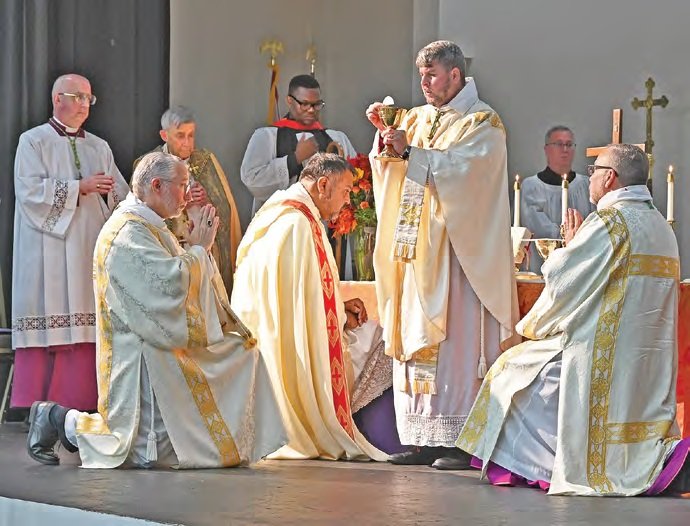
This past week, the clergy from the Diocese of the Eastern United States of the Anglican Province of America gathered in Helen, Georgia for a clergy retreat centered around the topic of unity in the Continuing Anglican Movement. We had a wonderful time of fellowship, enjoying the German-themed town of Helen which is full of exquisite cuisine and lots of German beer. In the proceedings of the conference, we heard from several speakers and had thorough conversation in which different voices and perspectives were given room to express questions and thoughts about what institutional unity might look like. We also heard from Fr. Briane Turley about reviving a Priests for Life ministry and Fr. Mark Perkins talked about the developments at St. Dunstan’s Academy. The major conversations revolved around three sessions: (1) Bp. Markus Dogo, the Bishop of Kafanchan in the Church of Nigeria; (2) presentations from Bp. Chad, canon theologian Fr. Glenn Spencer, and Archdeacon Mike Ward; and (3) a forum for the clergy to express their opinions.
Bp. Dogo’s talk was an informative look at the Church of Nigeria. The CoN began when missionaries from the Church of England brought the Gospel to the people of Nigeria. The CoN continues to be a faithful bearer of that same Gospel, growing at astounding rates: There are over 20 million Anglicans in Nigeria and 161 dioceses. While they remain members of the Anglican Communion—meaning they are in communion with the Church of England—they have been in an uneasy situation since the 1998 Lambeth Conference where the topic of revising the Church’s teachings on sex and sexuality was first broached. Their consternation at the Anglican Communion’s policies on women’s ordination and sexual ethics resulted in the Kigali Commitment of 2023. The Commitment empowered the orthodox provinces of the Anglican Communion to double down on their commitment to the authority of Scripture while highlighting the failure of the Archbishop of Canterbury and the rest of the Anglican Communion to uphold the historic faith. The Commitment calls for repentance and a reconfiguration of the Anglican Communion. Bp. Dogo was sent to our clergy retreat on behalf of the CoN to begin a conversation about what kind of relationship we could have with them in the future. Nothing concrete was proposed, but Bp. Dogo did provide a potent exhortation for us all to contend for the faith once delivered to the saints by earnestly standing by the truth of the Christian faith.
The second session on the topic of institutional unity in the G3 featured three presentations. The first was Bp. Chad who gave a talk on the theological understanding of the unity of the Church. He pointed out that the current relationship between the Anglican Province of America, the Anglican Catholic Church, and the Anglican Church in America is a sacramental one based on the Communion Concordat of 2017. Bp. Chad reminded us that the APA is “entirely committed” to that agreement and in fully realizing its vision for full unity. Together, we possess the four notes of the Church: one, holy, Catholic, and apostolic; the goal now is to restore koinonia. To do so, we must move forward in a deliberate manner, being careful not to repeat the mistakes of the past or wander into new errors.
Bp. Chad then read a report from Fr. Spencer titled “Intercommunion or Union?” Fr. Spencer examined two relevant case studies. The first is the Standing Conference of the Canonical Orthodox Bishops in the Americas (SCOBA) which was a group of bishops from various Orthodox jurisdictions in the United States that met to pave the way for greater unity between their groups. It was later replaced by the Assembly of Canonical Orthodox Bishops of North and Central America when SCOBA had succeeded in its mission. The second case study was the debacle at Deerfield Beach in which unity between Continuing Anglicans was rushed and further schism occurred as a result. From these two studies, Fr. Spencer urged us to resist the tyranny of the urgent, gather data about our respective jurisdictional situations, be attentive to the unique cultures of the various jurisdictions involved, think through the question of authority, and to be attentive to our Solemn Declaration, Constitution, and Canons.
The final speaker of the second session was Fr. Mike Ward on the topic of canonicity and institutional unity. The crux of the canonical issue is that while the ACC canons allow for the potential dissolution of the entity (see 21.13), the APA Constitution and Canons lack such a provision. From a canonical standpoint, then, there are a few possible solutions moving forward: (1) the APA could amend its founding documents to allow for dissolution or adaptation to a new ecclesiastical situation; (2) clergy and laity could receive letters dimissory that allows them to move to a new ecclesial environment and the APA could exist purely as an “empty shell”; (3) The APA could receive letters dimissory from the members of other jurisdictions and assume them; or (4) a SCOBA-like structure could be erected as a means of supporting further dialogue and mutual ecclesiastical work.
The third session of the retreat was a conversation in which clergy had the opportunity to voice comments and questions about the material that had presented in the previous presentations. Not all the comments can be communicated here, but in general, the desire to move the process forward in a responsible way was articulated by several of the clergy. This was evident in a number of questions about and suggestions for moving forward, like the establishment of a committee with representatives from each of the jurisdictions that could craft certain proposals to be adopted by the G3 provinces and implement the will of the G3 in creating common resources, like a joint website, a joint catalogue of G3 parishes, and policies, like uniform standards for the Boards of Examining Chaplains. Further, the commitment to unity was evident in the desire for real grassroots communications and connectivity between members of the various provinces.
It’s been seven years since the Communion Concordat was signed by the then-G4 in Atlanta. That watershed moment was the end of a 40-year wilderness wandering during which the Continuing jurisdictions remained separated. Perhaps another Bible story is instructive here: Jacob’s 14 years of labor for his wife Rachel. While we have certainly seen many good things in the first seven years, progress has been slow. But the story of Jacob reminds us that these years of laboring for something so important are worth it, even when they’re hard and even when they take longer than we might have originally anticipated. Personally, I left our clergy retreat feeling excited about the prospects for the future, and I look forward to seeing what God will do in our midst.